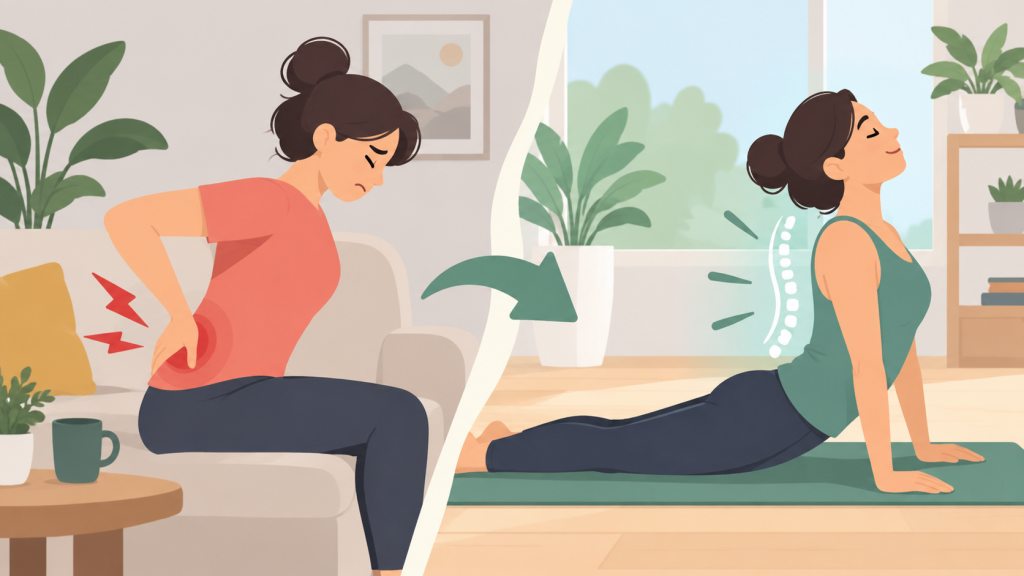
Exercises for back pain
Anúncios
The key is not to do intense movements, but to start with simple exercises, observe how the body responds, and seek professional evaluation if the pain is persistent or appears after an injury.
VIEW THE EXERCISES →START SOFTLY →AVOID MISTAKES →Back pain is a very common ailment and can occur after many hours of sitting, changes in routine, physical exertion, or periods of inactivity. When it is a mild ailment without any alarming signs, gentle movement is often more helpful than remaining completely immobile for several days.
The Mayo Clinic notes that exercise can help relieve back pain and prevent new discomfort, especially when it combines stretching and strengthening the muscles that support the spine. The important thing is to start gradually.
Anúncios
Not all pain has the same cause. If the problem started after a fall, accident, or strenuous activity, or if it's accompanied by significant weakness, loss of sensation, fever, or changes in bladder or bowel control, it's best to seek medical attention rather than trying to resolve it with exercise alone.
For common aches and pains, a short routine can include mobility exercises, abdominal activation, and exercises that work the glutes and hips. The idea is not to create pain to "strengthen," but to move within a comfortable range of motion.
Consistency matters more than intensity. Ten or fifteen minutes of well-executed and regularly repeated exercises are usually more effective than one long session that leaves the area even more sensitive.
- Start with gentle movements.
- Avoid working on acute pain.
- Strengthens abdomen, glutes and hips progressively.
- Change position throughout the day.
- Consult a doctor if the pain persists or presents any warning signs.
What exercises are usually useful
Movements such as gently bringing one knee towards the chest, performing controlled pelvic tilts, and activating the abdominal muscles can help regain mobility and control.
Glute bridges and gentle hip exercises can also strengthen structures that assist the back during daily activities.
VIEW THE EXERCISES →How to know if you should lower the intensity
A mild stretching sensation may be normal, but sharp, radiating pain or pain that worsens with each repetition is a sign to stop.
You don't need to push yourself to your limits. The goal is for your body to feel looser afterward, not more irritated.
VIEW THE EXERCISES →If you spend many hours sitting, try to get up frequently and walk around a bit. Changing position reduces the amount of time your back is under the same strain.
Rest is still important, but rest doesn't mean total immobility. Alternating short periods of activity with breaks can be a more comfortable strategy when the area is sensitive.
If the pain persists, recurs frequently, or limits normal tasks, an evaluation with a physical therapist or healthcare professional can help you better understand the cause and tailor your exercises.
A brief warm-up can make the movements feel more comfortable. Walking around the house or gently moving your shoulders and hips is enough to get started.
Breathing also matters: holding it during exercise often increases unnecessary tension. Try to maintain a normal rhythm.
A brief warm-up can make the movements feel more comfortable. Walking around the house or gently moving your shoulders and hips is enough to get started.
Breathing also matters: holding it during exercise often increases unnecessary tension. Try to maintain a normal rhythm.
A brief warm-up can make the movements feel more comfortable. Walking around the house or gently moving your shoulders and hips is enough to get started.
Breathing also matters: holding it during exercise often increases unnecessary tension. Try to maintain a normal rhythm.
A brief warm-up can make the movements feel more comfortable. Walking around the house or gently moving your shoulders and hips is enough to get started.
FAQ
Can exercise help your back?
Yes, exercise is often part of managing common ailments and can help improve mobility and strength.
Should I train if exercise greatly increases the pain?
No. If the pain clearly increases, stop the movement and consider professional evaluation.
How much time do I need?
A short, consistent routine may be enough to get started; an extensive session is not necessary.
Does walking help?
For many people, walking at a comfortable pace is a simple way to stay active.
Which muscles should be strengthened?
Abdomen, glutes, hips and trunk support muscles are usually important.
When should I seek help?
If you experience severe pain after injury, significant weakness, loss of sensation, fever, urinary or bowel changes, or if the pain persists and limits your life.
On the second page you will find the most important steps and recommendations.
VIEW THE EXERCISES →